Culture · Essay
The Tetris effect: what the brain does with an afternoon you did not mean to keep
Play enough Tetris and the falling blocks follow you into the dark behind your eyes. The odd part is that amnesiac patients, who could not remember playing, saw them too. On what that says about which memories are which.Written to last.
By Confinity Editorial · 2026-04-23 · 6-minute readQuiet tools, kept out of the way.
Play Tetris for several hours and something happens on the way to sleep. The blocks come back. They fall behind closed eyes, rotating, and some part of you is still fitting them together.
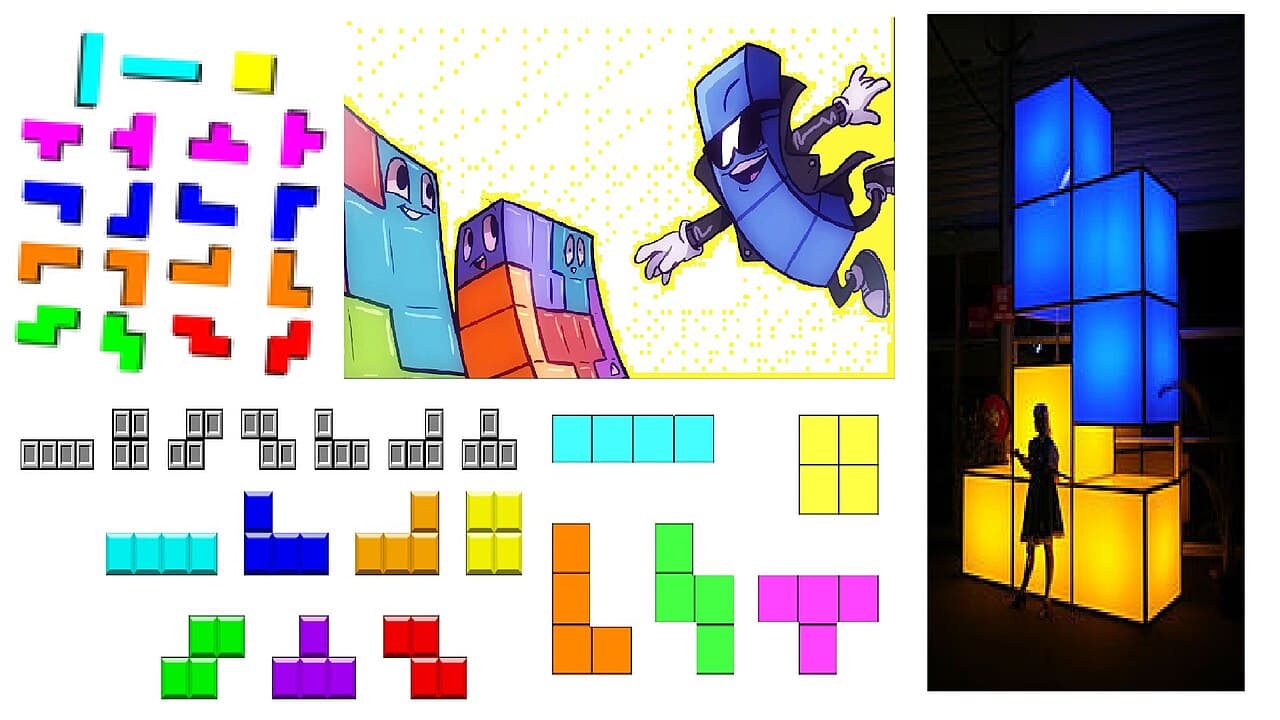 It is not confined to Tetris. Chess players see boards. People who have spent a day picking fruit see fruit. Anyone who has driven for twelve hours knows what the road does when they lie down. Tetris got its name on the phenomenon because the game was everywhere in the early 1990s and the images it produces are unusually clean.
Most reports place it in hypnagogia, the state between waking and sleep, when the usual controls on imagery have loosened and you are not yet dreaming.
That is also, not coincidentally, when the brain is beginning the work of consolidation: taking the day's experience and deciding what to keep and how. The Tetris effect looks a great deal like watching that process from the inside, as it handles a task you performed too many times in one sitting.
It can also intrude while awake. People report seeing the shapes over supermarket shelves, or catching themselves mentally rotating a lorry into a gap in the traffic.
In 2000 a study at Harvard did the obvious thing and then something better than obvious.
The obvious part: give people Tetris for several hours across a few days and ask what they see at sleep onset. Most of them saw falling blocks, as expected.
The better part: run the same protocol with a small group of patients who had dense anterograde amnesia, from damage to the hippocampus and surrounding structures. These are people who could not form new episodic memories. They did not remember having played the game. Several did not recognise the researchers from one day to the next, and could not describe the equipment.
They saw the blocks anyway. They reported images of shapes falling and turning, without being able to say where the images had come from.
The result splits something that ordinary experience keeps welded together.
Episodic memory is the record of the event: I played Tetris on Tuesday, in that room, and it was tedious. That is the system those patients had lost.
Whatever produces the hypnagogic imagery is a different system, intact in them, running on a machinery that does not require you to be able to recall the session. The trace of the afternoon persisted while the afternoon itself did not.
There is a companion finding in the same tradition: patients with amnesia can learn motor skills, improving day after day at a task they insist they have never attempted. The hands remember. The person does not.
The effect has had a second life as an intervention rather than a curiosity.
Trials have tested playing Tetris shortly after a traumatic event, or after deliberately reactivating the memory of one, on the reasoning that a demanding visuospatial task competes for the same resources the brain uses to consolidate intrusive visual memories. Several studies report fewer intrusive images in the following week. The work is promising, contested and not settled, and it is a long way from clinical routine.
What makes it relevant here is the premise both the effect and the intervention share: consolidation is a process with a window, and things can get in during that window and change what is kept.
The Tetris effect is an argument, made by the brain itself, that recording and remembering are separate operations.
Something was kept from those afternoons. The people who could not remember playing still carried the shape of it, and it surfaced when the guard came down. What was lost was the part that makes a memory belong to a person: the where, the when, the who else was there, the fact that it was yours.
That is exactly the half a family loses first. The photograph survives, and it is not lost in any physical sense. What goes is the episode around it: which afternoon, whose garden, why everybody was laughing. Within two generations the picture has become the visual equivalent of a falling block. Vivid, persistent, and attached to nobody.
Confinity is for the episode: who, when, where, and what was going on just outside the frame.
It is not confined to Tetris. Chess players see boards. People who have spent a day picking fruit see fruit. Anyone who has driven for twelve hours knows what the road does when they lie down. Tetris got its name on the phenomenon because the game was everywhere in the early 1990s and the images it produces are unusually clean.
Most reports place it in hypnagogia, the state between waking and sleep, when the usual controls on imagery have loosened and you are not yet dreaming.
That is also, not coincidentally, when the brain is beginning the work of consolidation: taking the day's experience and deciding what to keep and how. The Tetris effect looks a great deal like watching that process from the inside, as it handles a task you performed too many times in one sitting.
It can also intrude while awake. People report seeing the shapes over supermarket shelves, or catching themselves mentally rotating a lorry into a gap in the traffic.
In 2000 a study at Harvard did the obvious thing and then something better than obvious.
The obvious part: give people Tetris for several hours across a few days and ask what they see at sleep onset. Most of them saw falling blocks, as expected.
The better part: run the same protocol with a small group of patients who had dense anterograde amnesia, from damage to the hippocampus and surrounding structures. These are people who could not form new episodic memories. They did not remember having played the game. Several did not recognise the researchers from one day to the next, and could not describe the equipment.
They saw the blocks anyway. They reported images of shapes falling and turning, without being able to say where the images had come from.
The result splits something that ordinary experience keeps welded together.
Episodic memory is the record of the event: I played Tetris on Tuesday, in that room, and it was tedious. That is the system those patients had lost.
Whatever produces the hypnagogic imagery is a different system, intact in them, running on a machinery that does not require you to be able to recall the session. The trace of the afternoon persisted while the afternoon itself did not.
There is a companion finding in the same tradition: patients with amnesia can learn motor skills, improving day after day at a task they insist they have never attempted. The hands remember. The person does not.
The effect has had a second life as an intervention rather than a curiosity.
Trials have tested playing Tetris shortly after a traumatic event, or after deliberately reactivating the memory of one, on the reasoning that a demanding visuospatial task competes for the same resources the brain uses to consolidate intrusive visual memories. Several studies report fewer intrusive images in the following week. The work is promising, contested and not settled, and it is a long way from clinical routine.
What makes it relevant here is the premise both the effect and the intervention share: consolidation is a process with a window, and things can get in during that window and change what is kept.
The Tetris effect is an argument, made by the brain itself, that recording and remembering are separate operations.
Something was kept from those afternoons. The people who could not remember playing still carried the shape of it, and it surfaced when the guard came down. What was lost was the part that makes a memory belong to a person: the where, the when, the who else was there, the fact that it was yours.
That is exactly the half a family loses first. The photograph survives, and it is not lost in any physical sense. What goes is the episode around it: which afternoon, whose garden, why everybody was laughing. Within two generations the picture has become the visual equivalent of a falling block. Vivid, persistent, and attached to nobody.
Confinity is for the episode: who, when, where, and what was going on just outside the frame.