For families who want their stories to last. learn about the founding circle.

Heritage · Legacy

Aristotle Legacy

Aristotle (384 BC–322 BC): logic, ethics, the sciences. A fact-checked account of Aristotle's life and legacy.

Written to last.

By Confinity Heritage Editorial · Updated 2026-07-20 · 6-minute read
Quiet tools, kept out of the way.
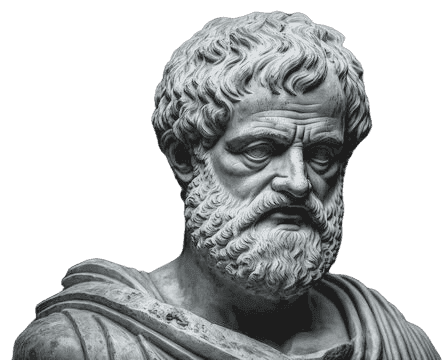
Portrait of Aristotle
Aristotle (384–322 BC) was a Greek philosopher and naturalist whose work shaped how the Western world reasons, argues, and studies the physical world. He was born in the small city of Stagira in northern Greece, spent about twenty years as a student at Plato's Academy in Athens, tutored the young Alexander of Macedon, and later founded his own school, the Lyceum. Across logic, physics, biology, psychology, metaphysics, ethics, politics, rhetoric, and poetics, he produced a body of work so wide that later readers referred to him simply as "the Philosopher." His surviving texts are not polished books. As the Stanford Encyclopedia of Philosophy notes, they "read like what they very probably are: lecture notes, drafts first written and then reworked, ongoing records of continuing investigations." Ancient catalogues attributed roughly two hundred works to him, of which about thirty-one treatises survive. What remains still sits near the beginning of nearly every subject it touches. He gave logic its first formal system, gave zoology its first sustained program of observation, and posed questions about virtue, causation, and the state that scholars still argue over. Aristotle was born in 384 BC in Stagira, a city on the Chalcidice peninsula in northern Greece. His father, Nicomachus, served as physician to King Amyntas III of Macedon, the grandfather of Alexander the Great, a family tie that would recur across Aristotle's life. Nicomachus died while Aristotle was still young, and the boy was raised by a guardian named Proxenus. A physician's household would have exposed him early to anatomy and the close study of living things, an interest that later ran through his biological work. At about seventeen, around 367 BC, Aristotle traveled south to Athens and entered Plato's Academy, then the leading center of philosophical study in the Greek world. He stayed for roughly two decades, first as a student and then as a teacher and researcher, until Plato's death in 347 BC. He admired Plato deeply while disagreeing with him on central points, and much of his later thought grew out of that disagreement, especially his rejection of Plato's view that the true forms of things exist separately from the things themselves. When Plato died, leadership of the Academy passed to his nephew Speusippus rather than to Aristotle. Aristotle left Athens and moved to Assos, on the coast of Asia Minor, under the patronage of Hermias, the ruler of nearby Atarneus. There he married Pythias, a relative of Hermias, and continued his research. He then crossed to the island of Lesbos, where, together with his student and lifelong associate Theophrastus, he carried out detailed observations of marine and animal life. This period on the eastern Aegean coast produced much of the raw material for his studies of animals. In 343 or 342 BC, Philip II of Macedon invited Aristotle to tutor his son Alexander, then about thirteen years old. Aristotle taught the future king at Mieza in Macedon. Little firm evidence survives about what passed between tutor and pupil, and the arrangement did not last many years, but the pairing of the age's most influential philosopher with its most powerful ruler has fascinated readers ever since. After Pythias died, Aristotle formed a lasting relationship with a woman named Herpyllis, with whom he had a son, Nicomachus, named for his own father. Around 335 BC, with Alexander now king, Aristotle returned to Athens and founded his own school in a grove sacred to Apollo Lyceus, from which it took the name the Lyceum. His followers became known as the Peripatetics, a name usually linked to the covered walkway, or peripatos, where they studied and to the habit of teaching while walking. The Lyceum emphasized empirical inquiry across many fields and assembled manuscripts and specimens, which helped establish the idea of an organized research community rather than a single teacher with pupils. Aristotle taught at the Lyceum for about twelve years. When Alexander died in 323 BC, anti-Macedonian feeling surged in Athens, and Aristotle, with his Macedonian connections, was charged with impiety. According to a widely repeated later tradition, he left the city rather than let the Athenians "sin twice against philosophy," a reference to the trial and execution of Socrates decades earlier. He withdrew to Chalcis on the island of Euboea, his mother's home region, and died there of natural causes in 322 BC, at around the age of sixty-two. Aristotle's method set him apart from many of his predecessors. He typically began from observed appearances and from the most widely held or most credible existing opinions, then worked through the puzzles they raised toward a defensible position. The Stanford Encyclopedia describes this as an appeal both to the phenomena and to the reputable opinions, or endoxa, "accepted by everyone, or by the majority, or by the wise." This habit of gathering evidence and prior views before theorizing gave his work a grounded, systematic character. His most lasting single achievement was the invention of formal logic. In the Prior Analytics he set out the syllogism, a structured argument in which a conclusion follows of necessity from two premises. By analyzing arguments in terms of their form rather than their subject matter, Aristotle produced the first system that could judge validity in the abstract. His logical writings, later grouped as the Organon, remained the standard for the study of reasoning in Europe and the Islamic world for close to two thousand years, and they are still a starting point for the field. In the works later collected as the Metaphysics, Aristotle asked what it means for something to exist and what explains change. He argued that ordinary things are compounds of matter and form, and that a full explanation of anything requires identifying four kinds of cause: the material it is made from, the form or structure it takes, the agent that brings it about, and the end or purpose it serves. He also reasoned toward a first cause of all motion, an "unmoved mover," which became a central reference point for later theology. In natural philosophy, Aristotle treated the study of nature as its own disciplined subject. His physics and cosmology described a stationary Earth at the center of the universe, with the heavens arranged in nested spheres and earthly matter composed of four elements each seeking its natural place. Much of this framework was later overturned by the astronomers and physicists of the Scientific Revolution, yet it structured European and Islamic thinking about nature for many centuries and set the questions that later scientists worked to answer. His biology has held up far better. In works such as the History of Animals and the Parts of Animals, Aristotle described hundreds of species, compared their anatomy, and grouped them by shared features. He insisted on observation over speculation and recorded findings, including details of marine animals, that were confirmed only much later. For this careful, comparative study of living things, he is widely regarded as a founder of biology. In On the Soul he extended the same analysis to living activity itself, treating the soul as the form or organizing principle of a living body rather than a separate substance. The Aristotelian corpus is usually organized by the divisions Aristotle himself used. He grouped knowledge into theoretical sciences, pursued for their own sake, such as metaphysics, physics, and psychology; practical sciences concerned with conduct, namely ethics and politics; and productive sciences aimed at making things, such as rhetoric and poetics. Logic stood apart as the tool, or instrument, common to all inquiry, which is why his logical treatises were named the Organon. His ethics survives chiefly in the Nicomachean Ethics, traditionally associated with his son Nicomachus. There Aristotle argued that the highest human good is eudaimonia, often translated as flourishing or living well, achieved through the excellent exercise of reason over a complete life. Virtue of character, on this account, is built by habit and practice, and each moral virtue lies as a mean between two extremes: courage, for example, stands between cowardice and recklessness. This approach, focused on character rather than on rules or consequences, is the root of what is now called virtue ethics. In the Politics, Aristotle described the human being as by nature a political animal, one whose full life is possible only within a community. He surveyed and compared different constitutions, including monarchies, oligarchies, and democracies, weighing how each tended toward stability or corruption. His analysis of citizenship, law, and the purposes of the state has remained a reference point in political theory. The Poetics, though it survives only in part, is the earliest substantial work of literary theory in the Western tradition. It analyzes tragedy in terms of plot, character, and the emotional effect Aristotle called catharsis, and it has influenced criticism and dramatic writing ever since. The title of the Metaphysics, meanwhile, most likely records nothing more than the order in which the treatises were arranged in antiquity, meaning literally the books placed "after the Physics." Aristotle's influence depended first on the survival of his texts, which was not guaranteed. According to ancient accounts, his working treatises passed through private hands for generations before the scholar Andronicus of Rhodes edited and arranged them into something close to the collection read today, around the middle of the first century BC. That editorial work fixed the shape of the corpus and the order of many of the treatises. In the medieval Islamic world, Aristotle was studied intensely and translated into Arabic, and philosophers including al-Farabi, Avicenna, and Averroes built extensively on his logic, metaphysics, and natural science. He was honored there with the title "the First Teacher." Averroes in particular wrote detailed commentaries that later shaped how Aristotle was read in Christian Europe once his works returned to the Latin West through translation. In medieval Christendom, Aristotle became the dominant philosophical authority. Thomas Aquinas set out to reconcile Aristotelian philosophy with Christian doctrine, referring to Aristotle so often and so respectfully that he called him simply "the Philosopher." The poet Dante, summing up this reverence, placed Aristotle among the great thinkers and named him "the master of those who know." For centuries, university curricula in logic, ethics, and natural philosophy were built around his texts. The rise of early modern science both drew on Aristotle and pushed against him. Figures of the Scientific Revolution such as Galileo challenged his physics and cosmology directly, and much of his account of motion and the heavens was replaced. Yet his emphasis on systematic observation, classification, and reasoned explanation remained part of the scientific outlook, and his logic held its central place in education well into the modern era. In philosophy, his work never left the conversation: virtue ethics, in particular, returned to prominence in the twentieth century, and his writings on logic, metaphysics, biology, and politics are still read and debated in universities worldwide. Almost everything known about Aristotle as a thinker comes from documents that were never meant to be published, preserved by students, copied by hand, lost and recovered, translated across languages, and argued over for more than two thousand years. His story is a reminder that a life of the mind survives only when someone chooses to keep the record and pass it on. Each generation that read, copied, or translated his treatises made a decision that his thought was worth carrying forward. That is also why the specifics matter. It is easy to reduce a figure like Aristotle to a name and a few dates, but the value lies in the detail: the physician's son who dissected sea creatures on Lesbos, the teacher who walked while he lectured, the exile who chose Chalcis over a second trial of philosophy in Athens. Heritage work is the effort to hold onto those specifics rather than let a person flatten into a label. Confinity exists to help people preserve that kind of detailed record for the individuals and communities they care about, so that a life is remembered as it actually was, with its work, its relationships, and its particular circumstances intact. Aristotle's example shows both how much can be recovered when a record is kept and how much depends on the ordinary, repeated act of preservation.
What we preserve here

A life worth keeping is a life worth re-reading. Confinity exists so the lives in your own family are kept with the same care.

More legacies to read

All legacies
Heritage library
Start your own archive