Heritage · University
Alexandria University: Programs, Campus & Admissions Info
Alexandria University is a leading institution offering top academic programs, research, and student life. Explore courses, campus details, and admissions info.Written to last.
By Confinity Heritage Editorial · Updated 2026-07-20 · 8-minute readQuiet tools, kept out of the way.
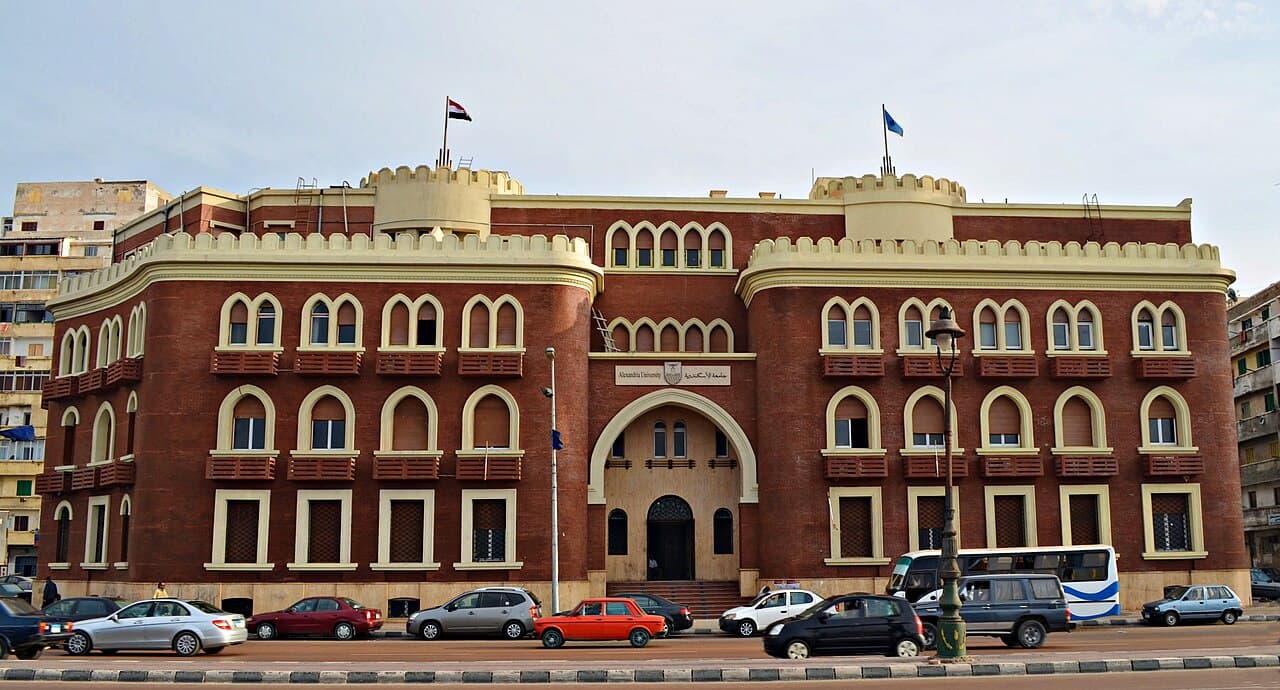
Alexandria University (Arabic: جامعة الإسكندرية) is a public research university in Alexandria, the second-largest city in Egypt and its main Mediterranean port. It was founded in 1938 as a regional outpost of the university in Cairo, became an independent institution in 1942, and took its present name after the Egyptian Revolution of 1952. Today it is among the oldest and largest universities in the country, teaching roughly 182,000 students across some two dozen faculties and institutes on a campus that runs along the shoreline of the eastern harbour.
A point worth settling at the start: this is a twentieth-century university, and it should not be confused with the ancient Library of Alexandria or the Musaeum that housed it, both of which flourished under the Ptolemaic kings more than two thousand years earlier and had vanished long before the modern institution was built. Nor is the university the same thing as the Bibliotheca Alexandrina, the striking modern library opened nearby in 2002. What ties these together is the city itself, a place that has carried a reputation for scholarship since antiquity, and a campus that grew up beside the water where that older tradition once stood.
The university began in 1938 as a branch of what was then Fuad I University in Cairo (later renamed Cairo University). Its first two teaching units were the faculties of Arts and Law, set up to serve students in the Delta and along the coast who would otherwise have travelled to the capital. For four years it operated as a satellite of the Cairo institution rather than a university in its own right.
Independence came in 1942, granted by royal decree during the reign of King Farouk I. The new institution was named Farouk I University in his honour, and it opened its doors with a wider set of faculties, adding Medicine, Science, Engineering, Agriculture and Commerce to the original two. Its first rector was Taha Hussein, the blind writer and critic often called the dean of Arabic literature, one of the most influential Egyptian intellectuals of the twentieth century. His appointment set an early tone: the university was meant to be a serious centre of thought.
The name did not last. When the Free Officers deposed the monarchy in the 1952 revolution, the royal association became a liability, and the institution was renamed simply Alexandria University. That title has held ever since. The three dates are easy to keep straight if you read them as a sequence: 1938 for the founding as a branch, 1942 for independence and the Farouk name, and 1952 for the change to Alexandria University after the king was gone.
From a handful of faculties in the 1940s, the university expanded steadily through the second half of the twentieth century into a comprehensive institution covering the humanities, law and commerce, medicine and dentistry, pharmacy and nursing, the physical and life sciences, engineering, agriculture, fine arts, education and tourism. By the 2020s it comprised roughly two dozen faculties along with specialised institutes, among them the High Institute of Public Health, the Institute of Graduate Studies and Research, and the Medical Research Institute.
Its scale is one of its defining features. Enrolment sits in the region of 180,000 students, which places it second only to Cairo University among Egypt's public universities and among the larger universities anywhere in the Arab world. That size reflects the role Egyptian public universities play: heavily subsidised, admitting large cohorts each year on the basis of national secondary-school results, and functioning as an engine of social mobility rather than a selective private academy. The main campus is urban and dispersed through the El-Shatby and Moharram Bek districts, with faculty buildings, teaching hospitals, libraries and student housing woven into the surrounding city rather than sealed off on a single enclosed site.
Teaching is organised in the pattern common to Egyptian public universities. Undergraduates enter a specific faculty directly from secondary school and follow a fixed programme, usually four years, extended to five in fields such as engineering, pharmacy and dentistry and to six in medicine, before graduating with a bachelor's degree. Postgraduate diplomas, master's degrees and doctorates are awarded through the same faculties and through dedicated bodies such as the Institute of Graduate Studies and Research. Instruction runs largely in Arabic in the humanities and law and in English across medicine, engineering and much of the sciences, a split that mirrors both the professional job market and the international research literature students are expected to read.
The university has also reached beyond Egypt's borders. It opened a branch in N'Djamena, Chad, in 2010, followed by one in Juba, South Sudan, in 2014, part of a wider pattern of Egyptian academic engagement across the Nile basin and sub-Saharan Africa. Scholarships for students from Nile basin countries have long been a feature of its graduate programmes, tying the institution into the region's networks of learning and exchange.
The university's best-known graduate is the chemist Ahmed Zewail, who earned his bachelor's degree there in 1967 and his master's in 1969 before moving to the United States for doctoral work. In 1999 he was awarded the Nobel Prize in Chemistry for his studies of chemical reactions on extremely short timescales, a field that became known as femtochemistry, in which reactions are observed using laser pulses lasting only femtoseconds, or quadrillionths of a second. He was the first Egyptian, and the first Arab, to win a Nobel Prize in a scientific discipline, and he remained a prominent public figure and advocate for science education in the Arab world until his death in 2016.
Zewail is not the only graduate of note. Mo Ibrahim, the Sudanese-British engineer and entrepreneur who built the mobile operator Celtel across Africa and later founded a prize for good governance, studied engineering at Alexandria. The nuclear physicist Yahya El Mashad, who worked on Iraq's atomic programme and was assassinated in Paris in 1980, graduated from the Faculty of Engineering in 1952. The Egyptologist Zahi Hawass, later Egypt's minister for antiquities and one of the most recognisable figures in the field, took his first degree in Greek and Roman archaeology at Alexandria in the 1960s.
Beyond individual names, the university's faculties of medicine, engineering and science have supplied generations of doctors, engineers, researchers and civil servants to Egypt and across the region. Its teaching hospitals in Alexandria are among the busiest in the country, and its engineering school has long-standing links to the shipbuilding, petroleum and petrochemical industries concentrated around the port.
To understand the university's setting, it helps to look at the city around it. Alexandria was founded by Alexander the Great in 331 BC and became, under the Ptolemaic dynasty that followed, the intellectual capital of the Hellenistic world. Its ancient Library and the Musaeum attached to it drew scholars such as Euclid, Eratosthenes and Callimachus, and aimed, at least in ambition, to gather copies of all the written knowledge of the age. That library declined over several centuries and was gone by late antiquity, destroyed in stages rather than in a single fire, and no part of it survives above ground today.
 The reading room descends in eleven terraces under a tilted glass roof, and holds around two thousand readers. The shelves are far from full, which is deliberate: it was built for a collection still to come. Photograph by Vyacheslav Argenberg, CC BY 2.0, via Wikimedia Commons.
It is worth dwelling on how far removed that ancient institution is from the modern one. The Musaeum, meaning a shrine of the Muses, was a royal research establishment attached to the Ptolemaic court, and the Library was its collection of papyrus scrolls rather than a public building of the kind we picture today. Estimates of its holdings vary enormously, from tens of thousands to several hundred thousand scrolls, and much about it is known only from later and often unreliable accounts. Its scholars nonetheless left a lasting mark: Euclid compiled his geometry in the city, Eratosthenes estimated the circumference of the Earth, and generations of grammarians produced the first careful editions of Homer. None of that work belongs to Alexandria University, which was created roughly seventeen centuries after the ancient Library had ceased to exist. The modern university inherits the city and its reputation.
The modern city has never quite let go of that memory, and in 2002 it acquired a new institution built explicitly to honour it. The Bibliotheca Alexandrina was inaugurated on 16 October 2002 on the Corniche, the seafront boulevard, on a site chosen for its proximity to the harbour where the ancient library is thought to have stood. Its design, a vast tilted disc of grey granite with a glass roof angled toward the Mediterranean like a sundial, came from the Norwegian architecture firm Snøhetta, which won an international competition backed by UNESCO in 1988. The building holds shelf space for millions of volumes and contains museums, galleries, a planetarium and research centres alongside its reading rooms.
The connection to the university is real but often misstated. The Bibliotheca Alexandrina is a separate national institution, developed by the Egyptian government in partnership with UNESCO. Its link to the university is one of place and cooperation rather than ownership: an Alexandria University committee helped select the site in the 1970s, on land between the campus and the sea, and the two institutions sit within walking distance of one another and collaborate on research and preservation. A student at the university can reach one of the largest new libraries in the region on foot, a piece of geography that gives the campus much of its character.
Alexandria University occupies a particular place in the Egyptian imagination. It stands for the idea that serious scholarship belongs not only in the capital but in Alexandria too, a cosmopolitan port that for much of the twentieth century was home to Greek, Italian, Jewish, Levantine and other communities alongside its Egyptian majority. The university opened during that era of mixture, and its early faculties reflected a city that looked outward across the Mediterranean as much as inland toward Cairo.
Its history also traces the political arc of modern Egypt in miniature. Founded under a constitutional monarchy, renamed after a revolution, expanded under the state-led expansion of higher education in the Nasser years, and pushed toward mass enrolment in the decades since, the institution has absorbed each shift in the country's direction. The change from Farouk I University to Alexandria University in 1952 is the clearest single mark of that history, a name erased along with the throne it honoured.
For the wider Arab world, the university has functioned as a training ground and a point of contact. Its graduates have carried its teaching into universities, hospitals, ministries and companies across the Middle East and Africa, and its scholarships have brought students from the Nile basin to study on the Egyptian coast. It is not, in the mythologised sense, a revival of the ancient Library, and it would be a mistake to read it that way. It is something more ordinary and in some ways more useful: a large, working public university that happens to stand in a city with an unusually long memory of learning.
What an institution like this preserves is only partly held in its archives, though those matter. The university's faculties keep the scholarly journals, dissertations, and records that document Egyptian academic life across nearly a century, including the bulletin of the Faculty of Arts that ran under the Farouk name from the 1940s onward and captured the concerns of a generation of writers and historians. Digitisation projects, some carried out with the nearby Bibliotheca Alexandrina, have begun to make parts of that record more durable and easier to reach.
The deeper thing it preserves is harder to file: the accumulated experience of the people who passed through it. Every large university is, among other things, a store of individual histories. A graduate's course of study, the teachers who shaped them, the friendships formed in a lecture hall or a dormitory in El-Shatby, the first paper published or the first patient seen in a teaching hospital, these are the details that make an education a life rather than a transcript. Institutions record the official version. The fuller story tends to live with families, in photographs, letters, and the memories people carry of a parent or grandparent who studied medicine or engineering by the sea in Alexandria and went on to build something with it.
That is the part most at risk of being lost, because it is rarely written down. A degree certificate outlives its holder; the reason the degree mattered usually does not. Keeping that context, who someone was, what they cared about, why a particular place and time shaped them, is work that no registrar performs. It falls to the people who knew them.
In the present day Alexandria University remains one of Egypt's principal centres of teaching and research. It appears in the major international rankings, generally in the upper-middle band for a large public university in the region, and it draws particular recognition in fields such as public health, pharmacy and library and information science. Its research units work on subjects ranging from cancer biology to marine and petroleum engineering, reflecting both the medical strength of its faculties and the industries of the port city around it.
Its challenges are those of Egyptian higher education generally: very large student numbers set against limited funding, pressure on facilities, and the difficulty of retaining talented researchers who are drawn to better-resourced systems abroad. Its advantages are its scale, its long-established professional schools, its teaching hospitals, and a location that keeps it close both to industry and to the cultural revival represented by the Bibliotheca Alexandrina. For hundreds of thousands of Egyptians, past and present, it has been the place where a career, and often a family's trajectory, began.
The reading room descends in eleven terraces under a tilted glass roof, and holds around two thousand readers. The shelves are far from full, which is deliberate: it was built for a collection still to come. Photograph by Vyacheslav Argenberg, CC BY 2.0, via Wikimedia Commons.
It is worth dwelling on how far removed that ancient institution is from the modern one. The Musaeum, meaning a shrine of the Muses, was a royal research establishment attached to the Ptolemaic court, and the Library was its collection of papyrus scrolls rather than a public building of the kind we picture today. Estimates of its holdings vary enormously, from tens of thousands to several hundred thousand scrolls, and much about it is known only from later and often unreliable accounts. Its scholars nonetheless left a lasting mark: Euclid compiled his geometry in the city, Eratosthenes estimated the circumference of the Earth, and generations of grammarians produced the first careful editions of Homer. None of that work belongs to Alexandria University, which was created roughly seventeen centuries after the ancient Library had ceased to exist. The modern university inherits the city and its reputation.
The modern city has never quite let go of that memory, and in 2002 it acquired a new institution built explicitly to honour it. The Bibliotheca Alexandrina was inaugurated on 16 October 2002 on the Corniche, the seafront boulevard, on a site chosen for its proximity to the harbour where the ancient library is thought to have stood. Its design, a vast tilted disc of grey granite with a glass roof angled toward the Mediterranean like a sundial, came from the Norwegian architecture firm Snøhetta, which won an international competition backed by UNESCO in 1988. The building holds shelf space for millions of volumes and contains museums, galleries, a planetarium and research centres alongside its reading rooms.
The connection to the university is real but often misstated. The Bibliotheca Alexandrina is a separate national institution, developed by the Egyptian government in partnership with UNESCO. Its link to the university is one of place and cooperation rather than ownership: an Alexandria University committee helped select the site in the 1970s, on land between the campus and the sea, and the two institutions sit within walking distance of one another and collaborate on research and preservation. A student at the university can reach one of the largest new libraries in the region on foot, a piece of geography that gives the campus much of its character.
Alexandria University occupies a particular place in the Egyptian imagination. It stands for the idea that serious scholarship belongs not only in the capital but in Alexandria too, a cosmopolitan port that for much of the twentieth century was home to Greek, Italian, Jewish, Levantine and other communities alongside its Egyptian majority. The university opened during that era of mixture, and its early faculties reflected a city that looked outward across the Mediterranean as much as inland toward Cairo.
Its history also traces the political arc of modern Egypt in miniature. Founded under a constitutional monarchy, renamed after a revolution, expanded under the state-led expansion of higher education in the Nasser years, and pushed toward mass enrolment in the decades since, the institution has absorbed each shift in the country's direction. The change from Farouk I University to Alexandria University in 1952 is the clearest single mark of that history, a name erased along with the throne it honoured.
For the wider Arab world, the university has functioned as a training ground and a point of contact. Its graduates have carried its teaching into universities, hospitals, ministries and companies across the Middle East and Africa, and its scholarships have brought students from the Nile basin to study on the Egyptian coast. It is not, in the mythologised sense, a revival of the ancient Library, and it would be a mistake to read it that way. It is something more ordinary and in some ways more useful: a large, working public university that happens to stand in a city with an unusually long memory of learning.
What an institution like this preserves is only partly held in its archives, though those matter. The university's faculties keep the scholarly journals, dissertations, and records that document Egyptian academic life across nearly a century, including the bulletin of the Faculty of Arts that ran under the Farouk name from the 1940s onward and captured the concerns of a generation of writers and historians. Digitisation projects, some carried out with the nearby Bibliotheca Alexandrina, have begun to make parts of that record more durable and easier to reach.
The deeper thing it preserves is harder to file: the accumulated experience of the people who passed through it. Every large university is, among other things, a store of individual histories. A graduate's course of study, the teachers who shaped them, the friendships formed in a lecture hall or a dormitory in El-Shatby, the first paper published or the first patient seen in a teaching hospital, these are the details that make an education a life rather than a transcript. Institutions record the official version. The fuller story tends to live with families, in photographs, letters, and the memories people carry of a parent or grandparent who studied medicine or engineering by the sea in Alexandria and went on to build something with it.
That is the part most at risk of being lost, because it is rarely written down. A degree certificate outlives its holder; the reason the degree mattered usually does not. Keeping that context, who someone was, what they cared about, why a particular place and time shaped them, is work that no registrar performs. It falls to the people who knew them.
In the present day Alexandria University remains one of Egypt's principal centres of teaching and research. It appears in the major international rankings, generally in the upper-middle band for a large public university in the region, and it draws particular recognition in fields such as public health, pharmacy and library and information science. Its research units work on subjects ranging from cancer biology to marine and petroleum engineering, reflecting both the medical strength of its faculties and the industries of the port city around it.
Its challenges are those of Egyptian higher education generally: very large student numbers set against limited funding, pressure on facilities, and the difficulty of retaining talented researchers who are drawn to better-resourced systems abroad. Its advantages are its scale, its long-established professional schools, its teaching hospitals, and a location that keeps it close both to industry and to the cultural revival represented by the Bibliotheca Alexandrina. For hundreds of thousands of Egyptians, past and present, it has been the place where a career, and often a family's trajectory, began.
History and founding
Growth of a modern university
Notable scholars and alumni
The city and the Bibliotheca Alexandrina