Comparison
Confinity vs Obsidian.
Obsidian is a local-first knowledge tool: plain-text markdown on your own disk, linked by hand into a graph. It's genuinely brilliant, and it asks a lot. You learn its markup, you connect your own notes by hand, and you piece together add-ons before it really shines.We'll tell you honestly when the other one is the better choice for you.
IHonest summary
Obsidian's values are close to ours. Local-first, plain format, no venture hype, a small bootstrapped team. We admire it. The difference is who has to do the work, and who the work is for. Obsidian rewards one person willing to invest weeks building the web of their own thinking. Confinity is for a whole household: write a memory, add a photo or recording, and connect it to the people it belongs with. You can gather selected memories into a digital book. Printed Yearbooks are planned; ordering and delivery are not available yet. Where we part ways is the work each tool is built around.
IIReal differences
- Built for
- One person's notes
- Confinity: a whole family.
- How connections form
- By hand. You type [[links]].
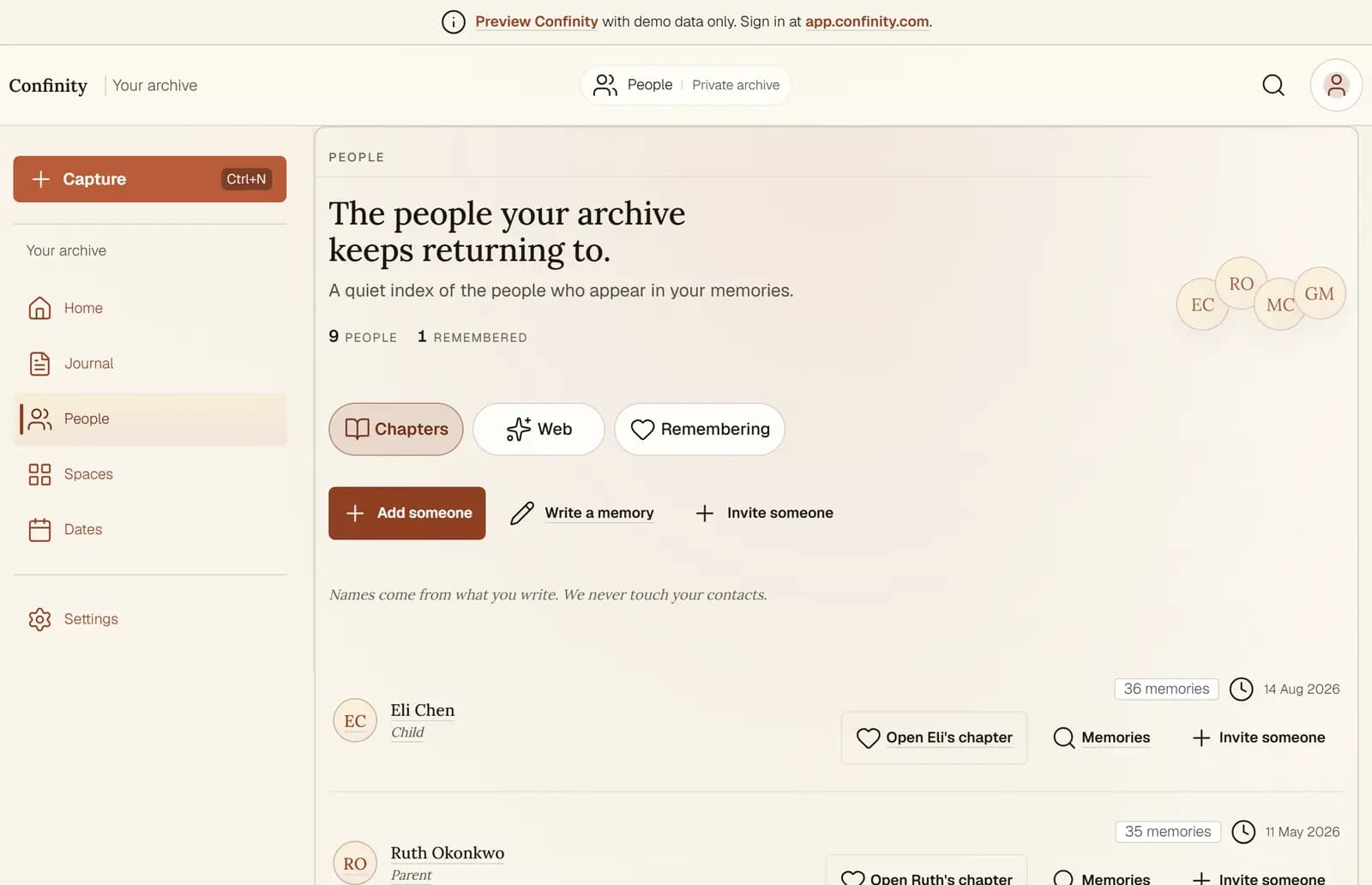
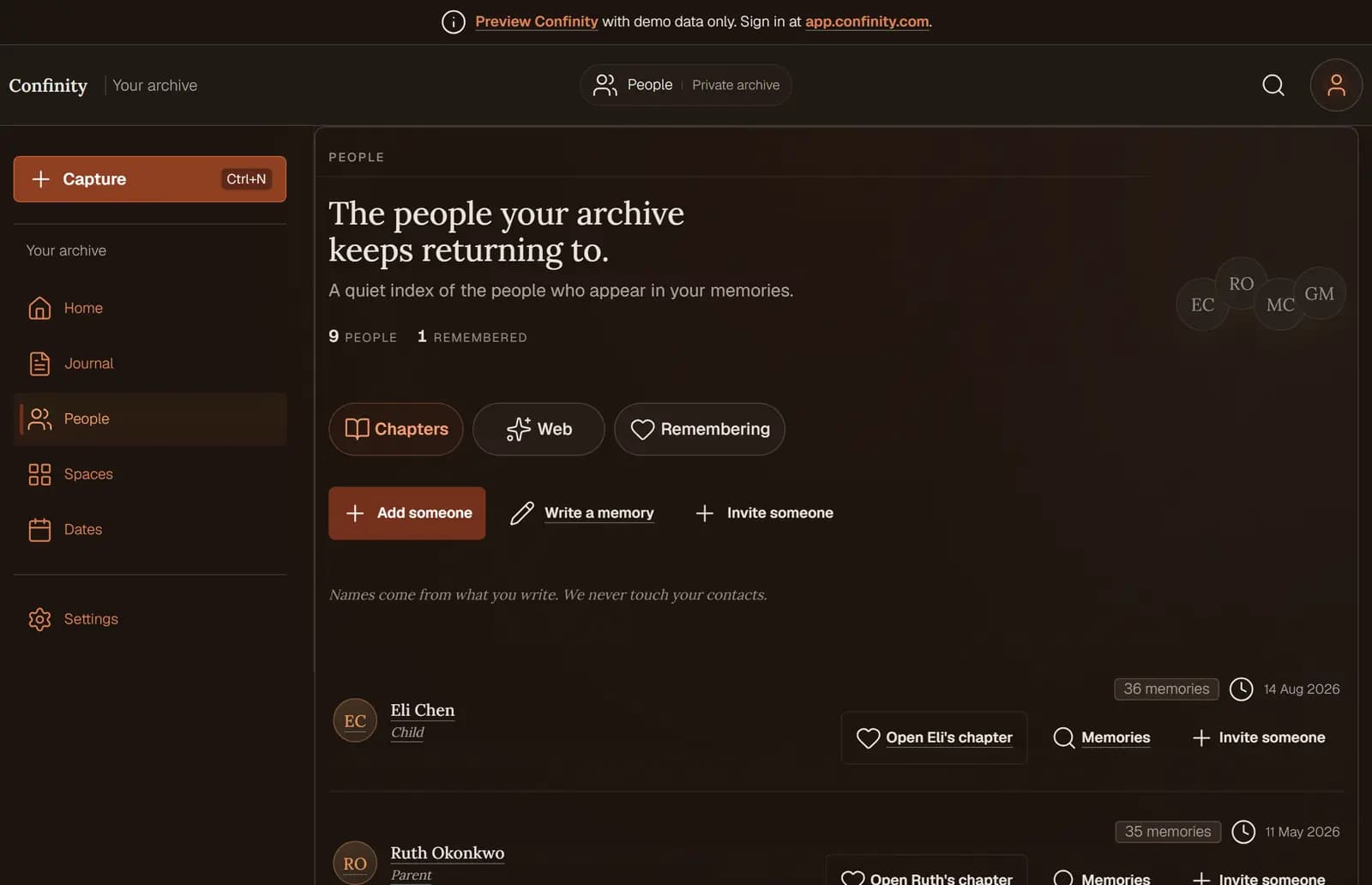
- Confinity: found automatically from the people and places you name.
- When you're gone
- A personal vault, left for family to navigate alone
- Confinity: remembrance and consent controls; legacy handover still needs qualification.
- Setup before it sings
- Plugins, themes, config
- Confinity: none. It's beautiful by default.
- Writing together
- Shared folders through paid Sync, though not true simultaneous writing
- Confinity: built in, with clear control over who can see what.
- Voice and photos
- Via community plugins
- Confinity: first-class.
- Printed keepsake
- None
- Confinity: Yearbook planned, not orderable yet.
- Price
- Free (paid sync / publish)
- Confinity Family: £14.99/mo, all in.
'Obsidian asks you to draw the connections. A family shouldn't have to.'Confinity principle
IIIWho should pick which
Who should pick