Our vision
Most apps file your memories. Confinity remembers them with you.
A private home for what your family writes, records, and keeps — organised when you ask, never broadcast.You choose dates, people, and places. Suggestions stay visible and undoable; nothing publishes without you.Private by default. Nobody sees it unless you ask them in.
The idea
Everyone has a life worth keeping, and no time to file it alone.
You speak or write a memory. Confinity keeps it on your device first, helps you name who and when when you want that, and brings the right piece back on the days that matter — without a feed, a streak, or a public stage.Part One
Voice comes first.
Typing is work, and memory shouldn't feel like work. The fastest way from a feeling to a kept memory is your own voice. So the microphone is the front door. You will never have to go looking for it in a menu.Open the app, tap once, and talk. While you speak, a soft copper light moves with your voice, so it feels like being heard.- Every screen offers the microphone first. The keyboard is there if you want it, never in your way.
- Speak now, read later. Your words are written out for you, right on your device. Nothing is uploaded.
Part Two
The clever part stays out of sight.
You aren't talking to a chatbot. You're filling an archive that tidies itself. Confinity reads each memory as it lands, works out the date from your words, links the people you mention, files it in the right place and joins it to what came before, all of it finished before you would have thought to ask.And it shows you what it did, gently. A calm line: dated to June 15, linked Maya, filed under Birthdays. You can undo any of it in a tap. That's automation you can trust, because you can always see it and always take it back.- It sorts dates, people, and places from the way you actually talk.
- It brings the right memory back at the right time. This day a year ago. A birthday coming up.
Part Three
It should feel like a keepsake.
People keep memories because they ache to. The app has to meet that. Warm, unhurried, and careful in the moments that count. Every little thing is a small act of care. Your archive settles into place when you arrive. A memory you've kept lands softly and tells you it's safe.Nothing here counts your days, awards you anything, or nudges you back. This holds the things you love most, and it treats them that way.- You always know your memories are safe. Backed up, or kept here for now. Said plainly.
- It should feel like something you'd hand down. A planned printed Yearbook when fulfilment is available.
What it feels like
Five moments we're building toward.
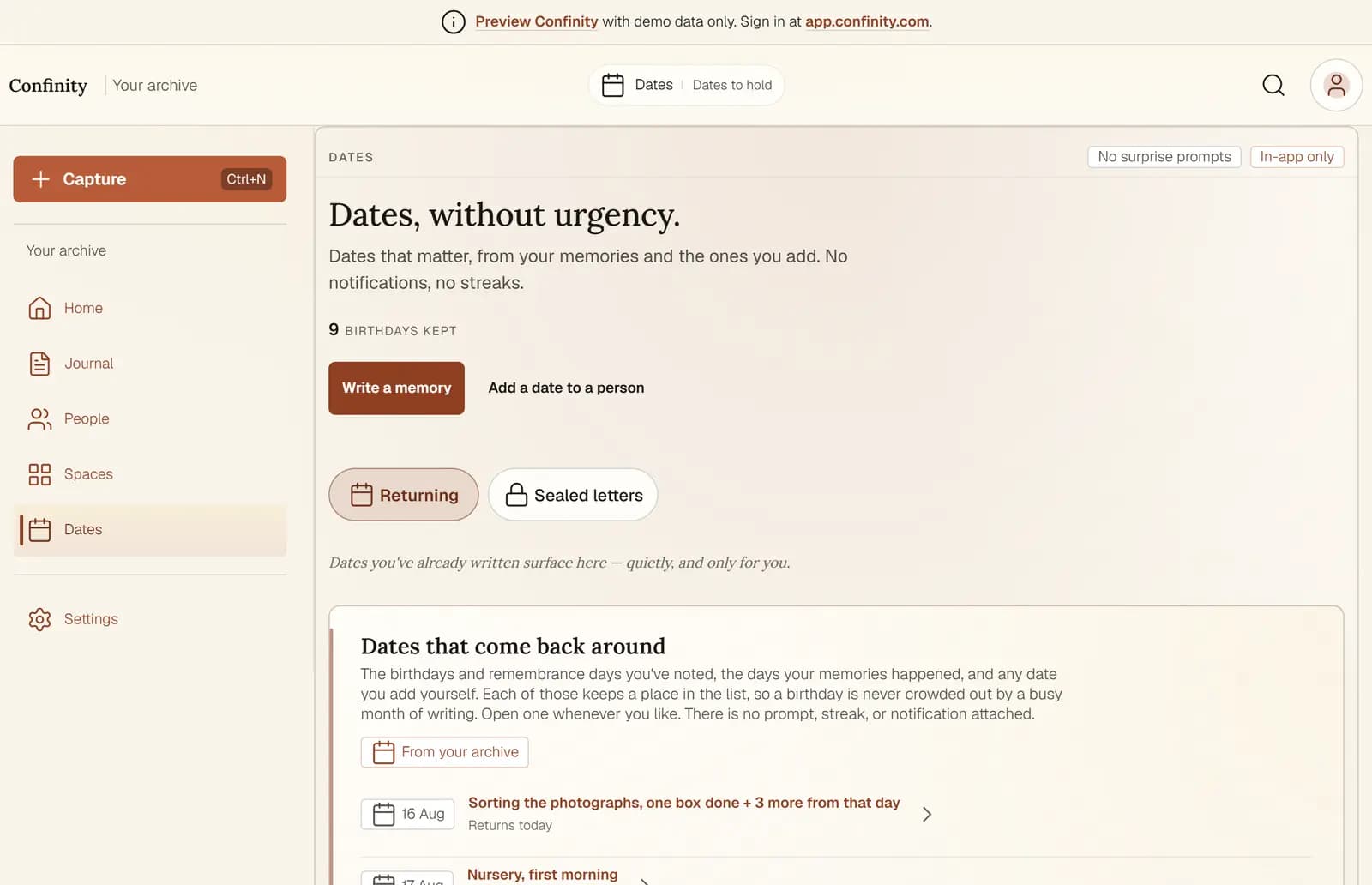
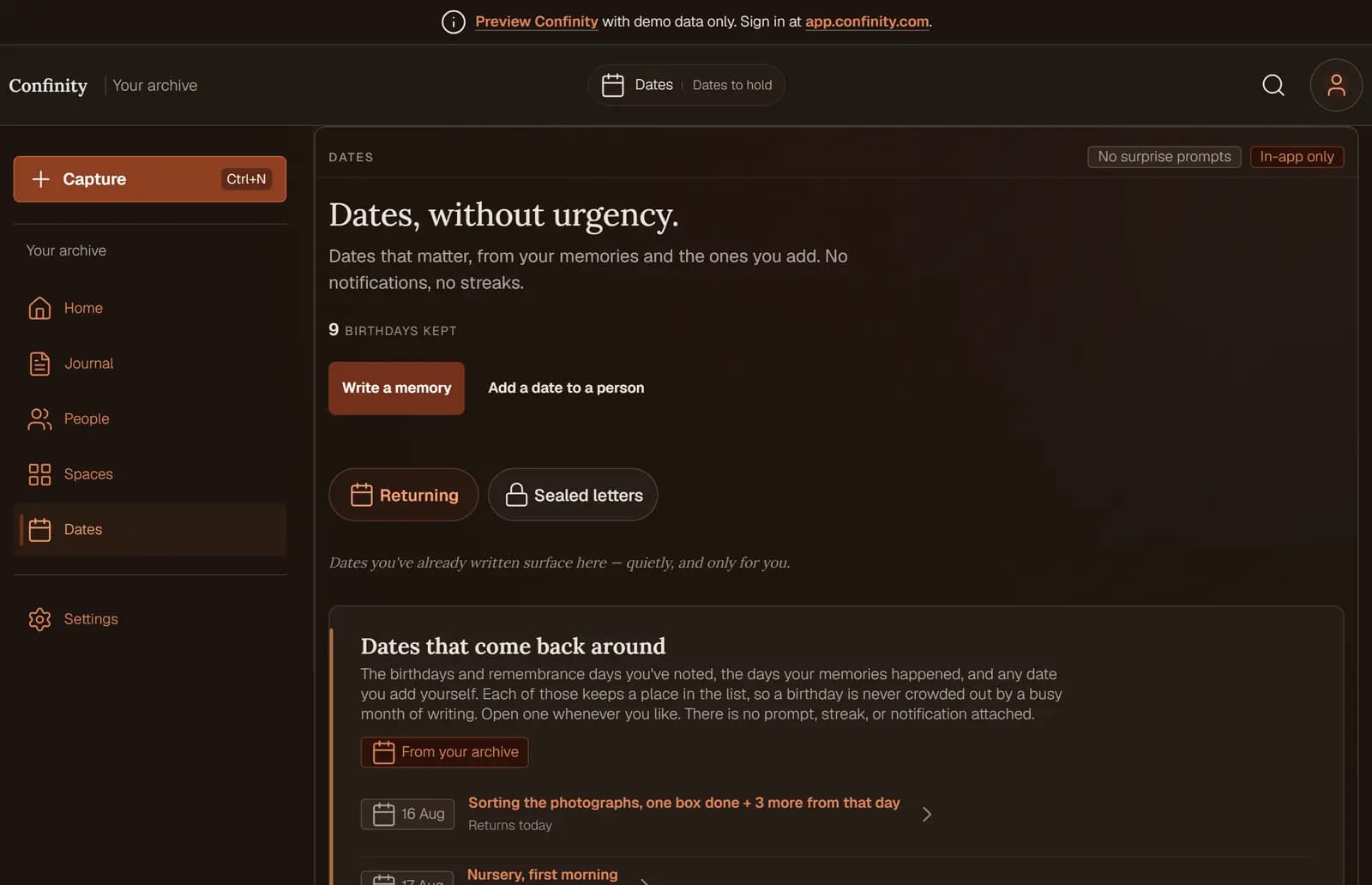
If it doesn't feel like a keepsake, it isn't finished.
If a grandparent can't do it by talking, we're not done. If the archive doesn't tidy itself, we haven't earned your trust. That's the line we hold, on every screen.Start with one memory