Heritage · University
Massachusetts Institute of Technology (MIT): History and Overview
Chartered in 1861 and opened in 1865 by William Barton Rogers, MIT is a Cambridge, Massachusetts research university famed for science and engineering.Written to last.
By Confinity Heritage Editorial · Updated 2026-08-25 · 8-minute readQuiet tools, kept out of the way.
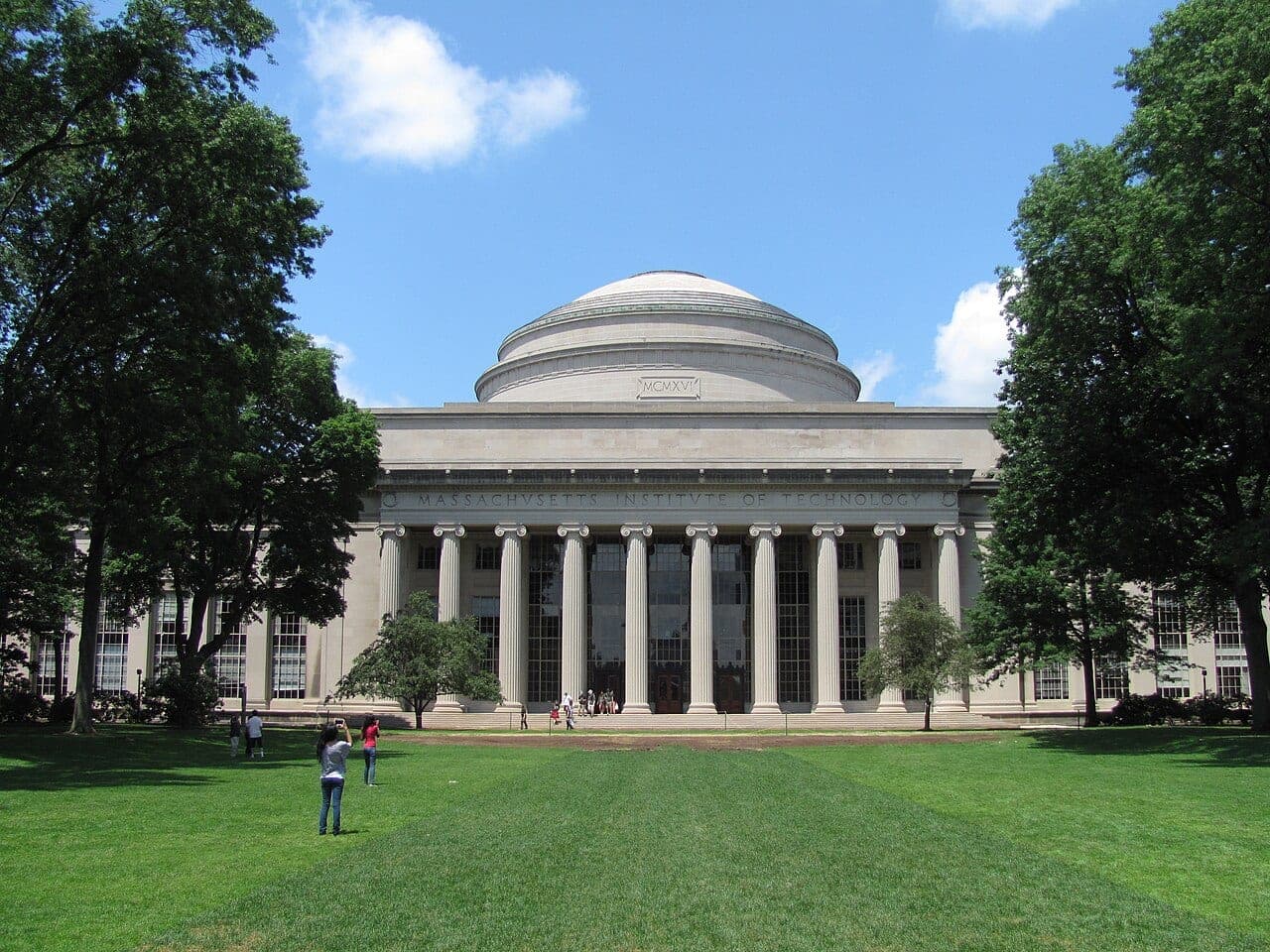
The Massachusetts Institute of Technology, known almost everywhere as MIT, is a private research university in Cambridge, Massachusetts, devoted above all to science, engineering, and technology. It was chartered in 1861 by the naturalist and educator William Barton Rogers, though the American Civil War delayed its opening until the first classes met in 1865. From a handful of rented rooms in Boston it has grown into one of the most influential scientific institutions in the world, its Cambridge campus dominated by the Great Dome that rises above Building 10 along the Charles River.
William Barton Rogers, a geologist who had taught in Virginia before moving north, spent years arguing for a new kind of school. He wanted an institution that would teach applied science through laboratory work rather than rote recitation, joining useful knowledge to a broad education. The Commonwealth of Massachusetts approved his charter for the institute on April 10, 1861, only days before the Civil War began.
The war postponed the opening, and the institute did not enroll its first students until 1865, when a small class gathered in rented quarters in Boston's Back Bay. The early school, sometimes remembered by the nickname "Boston Tech," took as its motto mens et manus, meaning "mind and hand," a phrase that captured Rogers's belief that thinking and making belong together. Rogers served as the institute's first president, and by a well-known account he died in 1882 while addressing a graduating class.
By the early twentieth century Boston Tech had outgrown its buildings. Under President Richard Maclaurin the institute acquired a tract of filled land, about a mile long, on the Cambridge side of the Charles River, and in 1916 it crossed the river to a new campus designed in a spare neoclassical style by the architect William Welles Bosworth. A three-day celebration marked the move, and much of the money that made it possible came from the industrialist George Eastman, who for years gave anonymously under the name "Mr. Smith."
Bosworth's central buildings still form the core of the campus. Their crowning feature is the Great Dome above Building 10, which looks out over the lawn of Killian Court toward the river, and behind the main entrance runs the Infinite Corridor, a long straight hallway that links the original wings. Twice each year the setting sun aligns with the corridor in a spectacle students call "MIThenge."
 The Great Dome is the traditional target of the hacks: a campus police car in 1994, a fire engine on the first anniversary of 11 September, and the Apollo lunar module in 2009. Photograph by Beyond My Ken, CC BY-SA 4.0, via Wikimedia Commons.
Academic work is organized into five schools: Architecture and Planning; Engineering; Humanities, Arts, and Social Sciences; the Sloan School of Management; and Science. In 2019 the institute added the MIT Schwarzman College of Computing to coordinate computing research and teaching across all of them. Woven through these schools is a dense network of laboratories and research centers, and the institute is known for a hands-on culture in which undergraduates take part in real research alongside faculty.
MIT's modern research reputation was forged during the Second World War. Its Radiation Laboratory, universally called the "Rad Lab," became the leading American center for the development of microwave radar, drawing thousands of scientists to Cambridge and reshaping how the institute ran large research projects. Lincoln Laboratory, established in 1951, grew out of that work and has concentrated on air defense, electronics, and national-security technology, while the MIT Media Lab, opened in 1985, explored the meeting of computing, design, and human communication.
That research has spilled outward into the surrounding city. The blocks around Kendall Square, next to the campus, hold one of the densest clusters of technology and biotechnology companies anywhere, many of them founded by MIT graduates or built on MIT discoveries. The institute is also cited as one of the most prolific sources of major scientific honors. By most published tallies more than one hundred Nobel laureates and roughly two dozen Turing Award winners have been affiliated with MIT as faculty, alumni, or researchers, though the exact figures depend on how affiliation is counted and are best treated as approximate.
Vannevar Bush joined MIT's electrical engineering department in 1919 and stayed for nearly two decades, building the differential analyzer, a room-sized mechanical computer that could solve equations with as many as eighteen independent variables, and rising in 1932 to become the institute's vice president and dean of engineering. He is remembered now for a machine he never built. In July 1945, in an essay for The Atlantic titled "As We May Think", Bush described a desk he called the memex, a name assembled out of "memory" and "index."
Inside that desk, on microfilm, a person would keep everything they had read, written, photographed, or been sent, with any page of it retrievable in seconds. The storage was the ordinary part. What made the idea outlast its technology was the linking. Bush thought filing by category was a poor imitation of how a mind actually works, so his desk let a reader tie one document to another, add a comment, and save the whole chain as an associative trail to be followed years later or handed to a colleague. The memex, he wrote, would be an enlarged and intimate supplement to its owner's memory.
No memex was ever assembled. The essay did the work instead. Douglas Engelbart read it as a young Navy radar technician stationed in the Philippines and spent the next twenty years building toward it, arriving at the mouse and the editable on-screen document; Ted Nelson, quoting Bush at length, coined the word hypertext in 1965. MIT keeps the man as well as the idea. Its Distinctive Collections hold Bush's papers, the files from his years in the vice president's office, and a 1,120-page transcript of an interview in which he was asked, late in life, to recall the whole of it in order.
MIT remains mid-sized by enrollment, with a student body of roughly twelve thousand divided between a smaller undergraduate population and a larger graduate one. It is unusually open with its teaching materials: through the OpenCourseWare project, launched in 2001, the institute has published lecture notes, problem sets, and other materials from thousands of its courses online, free for anyone to use. Backed by one of the largest university endowments in the world, its faculty and students work across fields that run from artificial intelligence and climate science to biology, physics, and economics.
The Cambridge campus welcomes visitors year-round. The MIT Museum, which reopened in a new home near Kendall Square in 2022, displays collections on robotics, holography, artificial intelligence, and the history of the institute. Killian Court and the Great Dome are favorite spots for photographs, and both student-led and self-guided tours introduce the Infinite Corridor along with the campus's outdoor sculpture and its many traditions. The Kendall/MIT stop on the subway's Red Line connects the campus directly to central Boston, and the cafes and bookshops of the surrounding neighborhood make the area easy to explore on foot. Tour schedules and admissions details are posted on the institute's official website.
The Great Dome is the traditional target of the hacks: a campus police car in 1994, a fire engine on the first anniversary of 11 September, and the Apollo lunar module in 2009. Photograph by Beyond My Ken, CC BY-SA 4.0, via Wikimedia Commons.
Academic work is organized into five schools: Architecture and Planning; Engineering; Humanities, Arts, and Social Sciences; the Sloan School of Management; and Science. In 2019 the institute added the MIT Schwarzman College of Computing to coordinate computing research and teaching across all of them. Woven through these schools is a dense network of laboratories and research centers, and the institute is known for a hands-on culture in which undergraduates take part in real research alongside faculty.
MIT's modern research reputation was forged during the Second World War. Its Radiation Laboratory, universally called the "Rad Lab," became the leading American center for the development of microwave radar, drawing thousands of scientists to Cambridge and reshaping how the institute ran large research projects. Lincoln Laboratory, established in 1951, grew out of that work and has concentrated on air defense, electronics, and national-security technology, while the MIT Media Lab, opened in 1985, explored the meeting of computing, design, and human communication.
That research has spilled outward into the surrounding city. The blocks around Kendall Square, next to the campus, hold one of the densest clusters of technology and biotechnology companies anywhere, many of them founded by MIT graduates or built on MIT discoveries. The institute is also cited as one of the most prolific sources of major scientific honors. By most published tallies more than one hundred Nobel laureates and roughly two dozen Turing Award winners have been affiliated with MIT as faculty, alumni, or researchers, though the exact figures depend on how affiliation is counted and are best treated as approximate.
Vannevar Bush joined MIT's electrical engineering department in 1919 and stayed for nearly two decades, building the differential analyzer, a room-sized mechanical computer that could solve equations with as many as eighteen independent variables, and rising in 1932 to become the institute's vice president and dean of engineering. He is remembered now for a machine he never built. In July 1945, in an essay for The Atlantic titled "As We May Think", Bush described a desk he called the memex, a name assembled out of "memory" and "index."
Inside that desk, on microfilm, a person would keep everything they had read, written, photographed, or been sent, with any page of it retrievable in seconds. The storage was the ordinary part. What made the idea outlast its technology was the linking. Bush thought filing by category was a poor imitation of how a mind actually works, so his desk let a reader tie one document to another, add a comment, and save the whole chain as an associative trail to be followed years later or handed to a colleague. The memex, he wrote, would be an enlarged and intimate supplement to its owner's memory.
No memex was ever assembled. The essay did the work instead. Douglas Engelbart read it as a young Navy radar technician stationed in the Philippines and spent the next twenty years building toward it, arriving at the mouse and the editable on-screen document; Ted Nelson, quoting Bush at length, coined the word hypertext in 1965. MIT keeps the man as well as the idea. Its Distinctive Collections hold Bush's papers, the files from his years in the vice president's office, and a 1,120-page transcript of an interview in which he was asked, late in life, to recall the whole of it in order.
MIT remains mid-sized by enrollment, with a student body of roughly twelve thousand divided between a smaller undergraduate population and a larger graduate one. It is unusually open with its teaching materials: through the OpenCourseWare project, launched in 2001, the institute has published lecture notes, problem sets, and other materials from thousands of its courses online, free for anyone to use. Backed by one of the largest university endowments in the world, its faculty and students work across fields that run from artificial intelligence and climate science to biology, physics, and economics.
The Cambridge campus welcomes visitors year-round. The MIT Museum, which reopened in a new home near Kendall Square in 2022, displays collections on robotics, holography, artificial intelligence, and the history of the institute. Killian Court and the Great Dome are favorite spots for photographs, and both student-led and self-guided tours introduce the Infinite Corridor along with the campus's outdoor sculpture and its many traditions. The Kendall/MIT stop on the subway's Red Line connects the campus directly to central Boston, and the cafes and bookshops of the surrounding neighborhood make the area easy to explore on foot. Tour schedules and admissions details are posted on the institute's official website.
History
Campus and academics
Research and impact
Vannevar Bush and the memex
MIT today
Visiting
References and resources
- Massachusetts Institute of Technology at Encyclopaedia Britannica, on the founding, the 1916 move, and the institute's research history
- MIT official website, with admissions, research, and campus information
- Massachusetts Institute of Technology on Wikipedia, with sourced detail on the schools, laboratories, and honors
- Moving Day at MIT, MIT News on the centennial of the 1916 crossing to Cambridge